


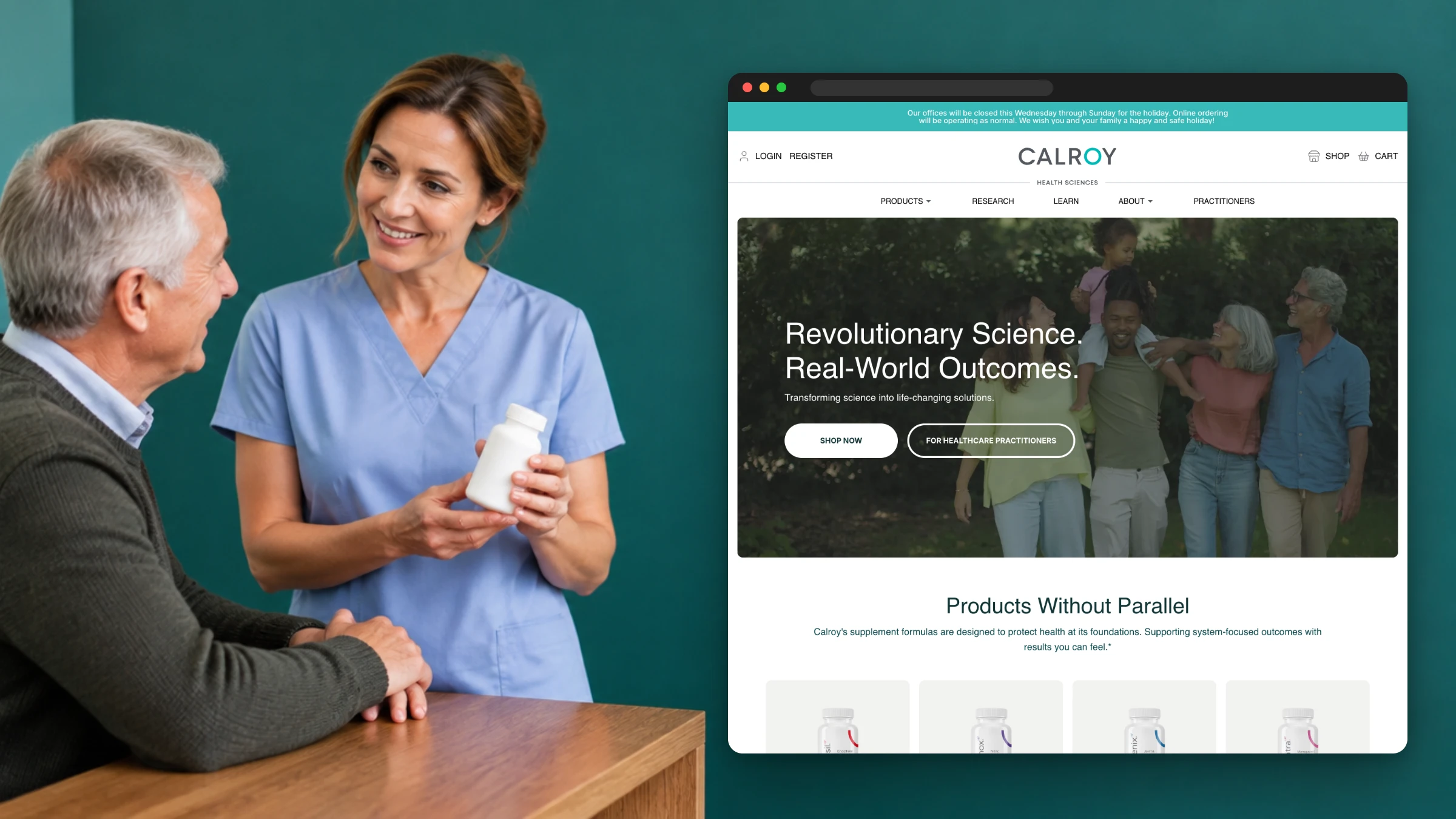
About Calroy Health Sciences
Calroy Health Sciences is a health sciences company specializing in nutraceutical and supplement products.
The company serves two primary audiences: healthcare practitioners who recommend and resell its products, and patients and consumers who purchase directly.
Its business model combines a practitioner network, tiered pricing, referral relationships, recurring orders, and a multi-level commission structure. Supporting these operations requires more than a traditional ecommerce storefront. The platform needs to understand who is purchasing, what pricing they are eligible for, and how orders connect to the company's practitioner referral network.
The Challenge
Supporting Two Business Models on One Ecommerce Platform
Calroy's existing WooCommerce platform had become increasingly difficult to manage as the business expanded its practitioner network and direct-to-consumer operations.
The company needed to support practitioners purchasing products at negotiated or tiered pricing while allowing patients and consumers to purchase from the same catalog at retail prices.
Beyond pricing, Calroy's referral network involved multiple levels of relationships: Root → Partner → Practitioner → Patient
Each order needed to be attributed correctly to the relevant practitioner or partner so that direct commissions and upline overrides could be calculated accurately.
The migration also needed to preserve several business-critical systems and processes, including:
- HubSpot CRM and its multiple sales and marketing pipelines
- An existing subscription and auto-ship platform
- A practitioner education platform
- Practitioner registration and account management
- Referral attribution and commission calculations
- Tax-exempt purchasing for eligible practitioners
- Existing customer relationships and historical data
- Legacy pricing arrangements for long-standing customers
Calroy also needed to preserve its existing SEO equity, including its URL structure and years of accumulated organic visibility.
This meant the migration was not simply about moving products and customers to Shopify. The new platform needed to recreate the business logic behind Calroy's ecommerce operations while making the underlying systems more flexible and maintainable.
The Solution
Shopify Plus With a Custom Business Logic Layer
ITGeeks migrated Calroy's ecommerce platform to Shopify Plus and developed a custom embedded application called Calroy Live to support functionality that Shopify could not provide natively.
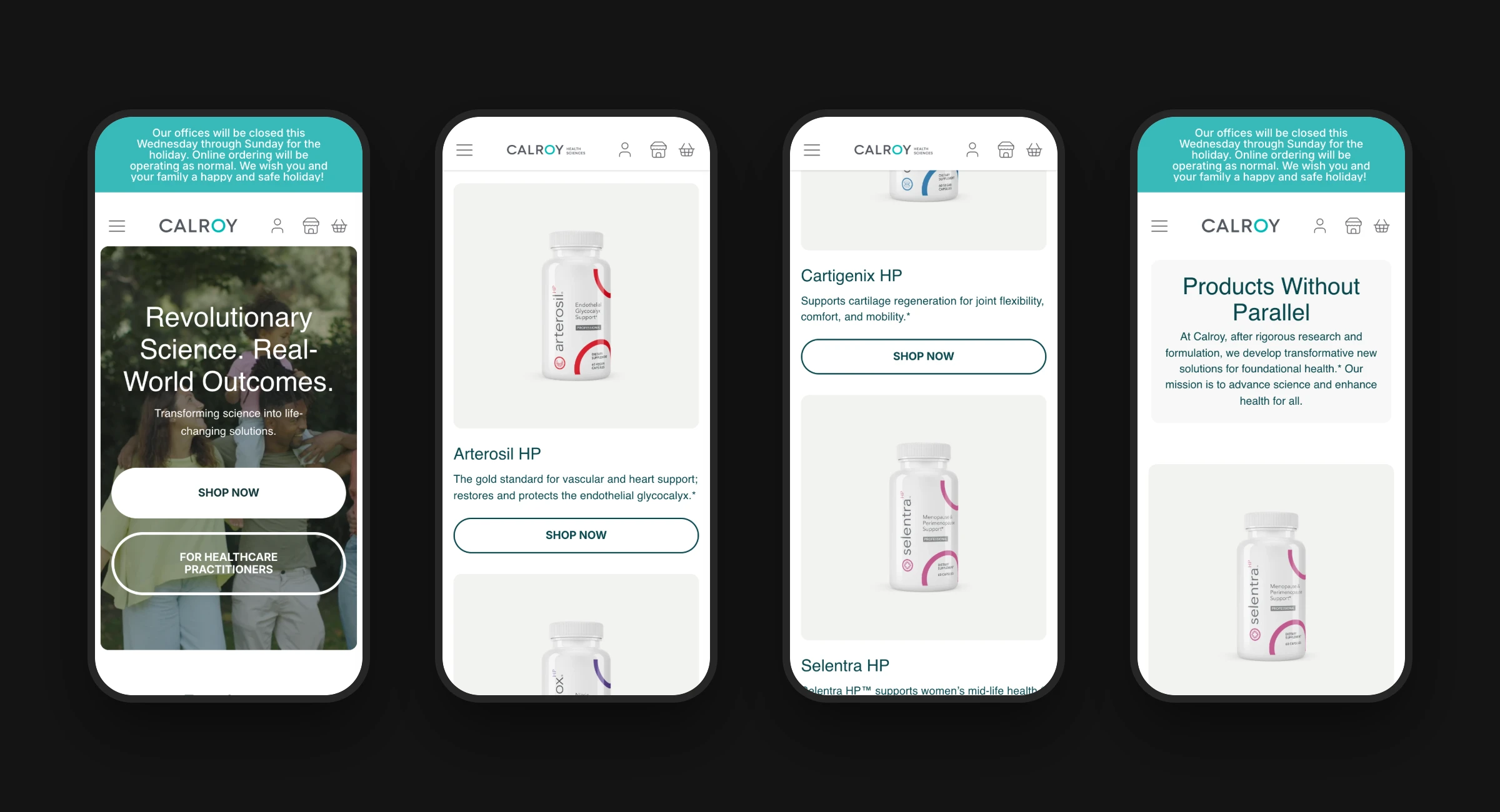
The storefront was rebuilt using a custom theme based on Shopify's Horizon framework, while Calroy Live handled the more complex practitioner, pricing, referral, and operational requirements.
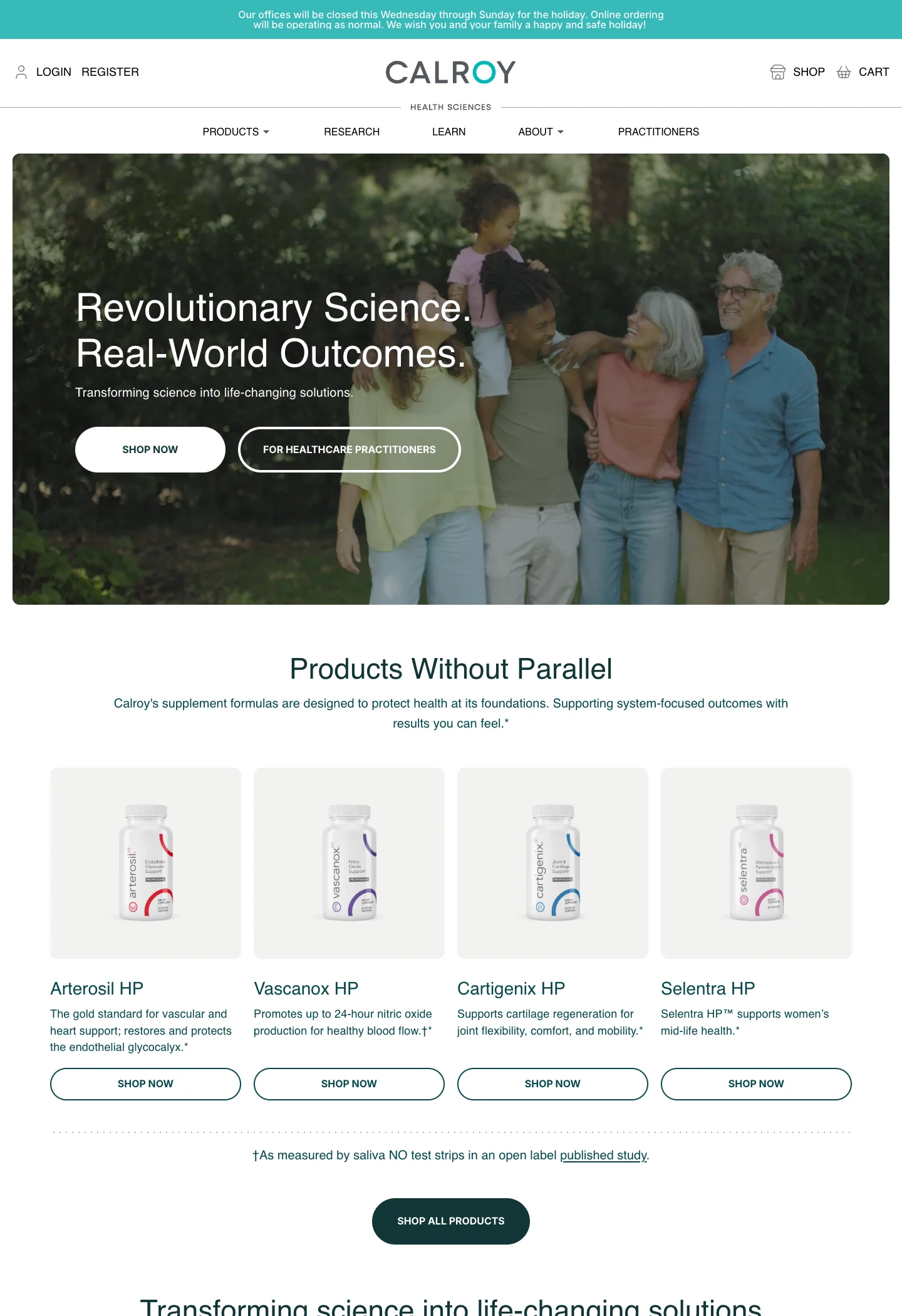
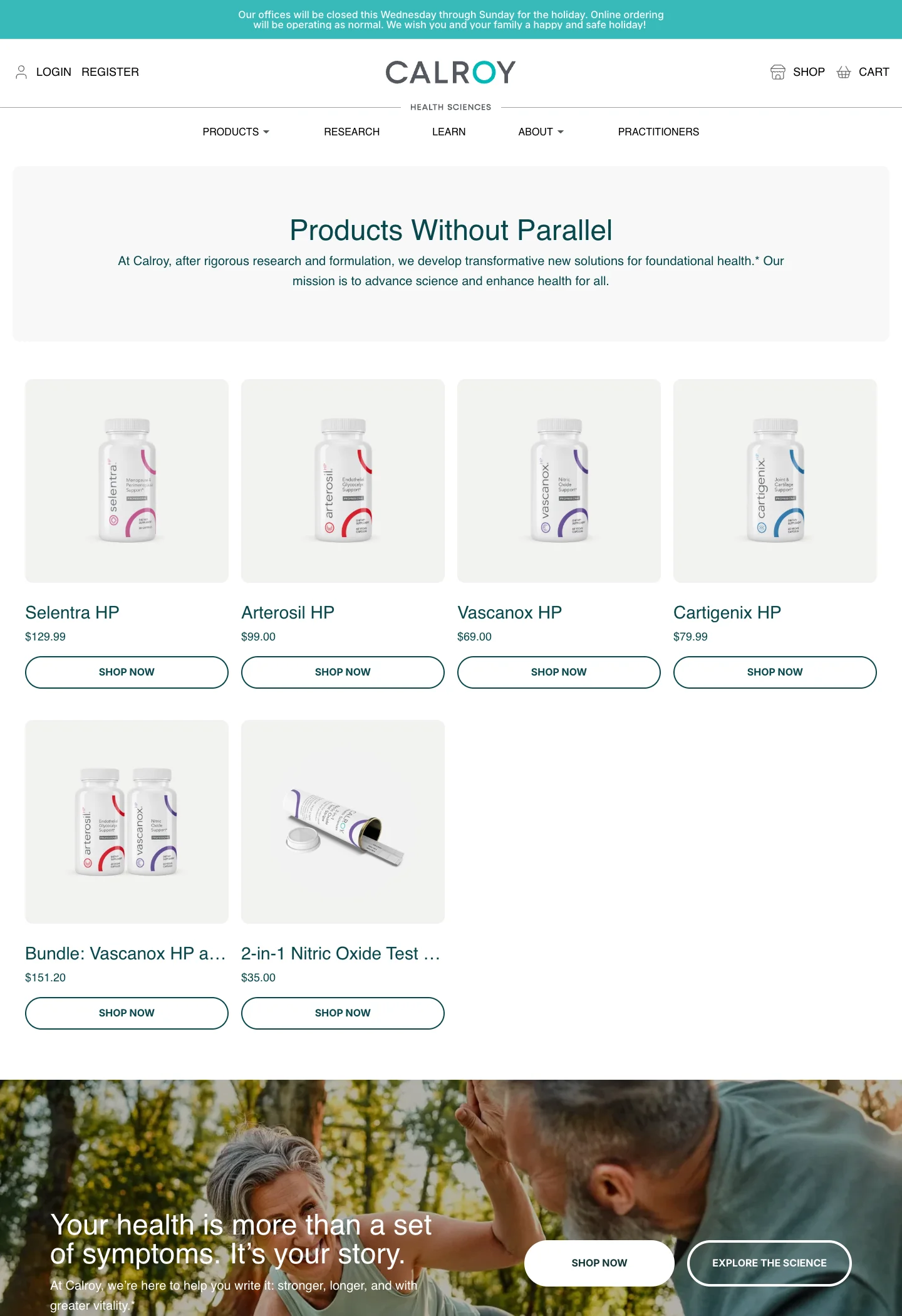
Together, the storefront and custom application created a platform capable of supporting Calroy's B2B and B2C business models within a single ecommerce ecosystem.
1. Building Calroy Live
Calroy Live was developed as a custom Shopify application to manage the business logic behind the practitioner network and its associated operations.
The application provided a centralized layer for managing the rules and relationships that governed how Calroy's customers interacted with the storefront.
- Practitioner registration and account management
- Practitioner and organization management
- Super-admin controls
- Dynamic pricing
- Referral tracking
- RevShare and override commission calculations
- HubSpot synchronization
- Customer segmentation
- Tax-exemption handling
- Redirect and blocklist management
- Shop as Customer functionality for support and testing
2. Supporting Practitioner and Consumer Pricing
One of the most challenging aspects of the project was supporting Calroy's tiered pricing model.
Practitioners, partners, and consumers could have different pricing requirements for the same products. These pricing rules needed to be applied dynamically without creating an unnecessarily complex product catalog.
The development team explored several approaches during the project, including Shopify B2B Catalogs and dynamically generated product variants.
However, the variant-based approach encountered Shopify's platform limit of 2,000 variants per product, making it unsuitable for Calroy's catalog and pricing requirements.
After multiple iterations, ITGeeks implemented a dynamic pricing architecture driven by product variant metafields. This approach allowed the platform to support Calroy's different pricing tiers without running into Shopify's variant limitations.
3. Implementing the RevShare Commission Engine
Calroy's practitioner referral network required more than basic affiliate tracking.
Orders needed to be associated with the correct referral relationships, allowing the system to distinguish between direct commissions and additional commissions earned by partners further up the referral network.
ITGeeks implemented referral tracking through parameters carried across the purchasing journey and developed the underlying commission logic to support Calroy's RevShare structure.
The application was designed to account for:
- Direct referral commissions
- Upline override commissions
- Practitioner and partner relationships
- Order attribution
- Commission tracking and ledger management
4. Connecting Calroy's Existing Systems
Calroy's ecommerce platform needed to work alongside several systems already embedded in its operations.
ITGeeks worked on preserving and rebuilding the integrations required to support the business, including:
- HubSpot CRM: The integration supported synchronization between Shopify and HubSpot across multiple pipelines, webhooks, and field mappings, allowing customer and sales-related information to flow between the platforms.
- Subscription and Auto-Ship Platform: Calroy's existing subscription functionality was managed by a third-party vendor, Patterns in the Cloud. The new storefront needed to continue supporting this functionality without disrupting the purchasing experience.
- Commission Payouts: The platform incorporated Trolley for commission payout functionality, connecting the commission-management process with payout operations.
- Practitioner Education Hub: Calroy's separate practitioner education platform remained part of the ecosystem, with single sign-on functionality connecting eligible practitioners to the learning environment.
Managing Complex Integrations and Technical Constraints
Throughout the project, the development team encountered several technical challenges that required changes to the original implementation approach.
Resolving Pricing Architecture Limitations
The initial pricing architecture required multiple iterations before the team arrived at a solution that could support Calroy's full catalog and pricing model.
Rather than forcing an approach that could not scale within Shopify's platform limits, the team reassessed the architecture and ultimately implemented a metafield-driven dynamic pricing solution.
Coordinating With the Subscription Platform
During development, changes to Calroy Live began interfering with the add-to-cart functionality used by the third-party auto-ship subscription widget. Because both systems interacted with the storefront, resolving the issue required coordination between ITGeeks and Patterns in the Cloud.
The teams held a dedicated technical meeting to identify the conflict and adjust the integration, allowing both systems to work together without disrupting the purchasing experience.
Strengthening Data and Integration Reliability
The migration also involved extensive data cleanup and testing.
Legacy customer pricing information contained inconsistencies that needed to be reconciled before it could be used within the new pricing architecture.
The team also worked through webhook reliability issues, tax-exemption logic, and application-level data integrity concerns to improve the reliability of the platform before the transition.
Improving Accessibility Across the Storefront
As part of the development process, the custom Shopify theme underwent an accessibility review. The initial automated review flagged 198 WCAG-related issues across 51 theme files.
ITGeeks worked through the identified issues systematically, reducing the number of flagged issues to just 5. This represented a 97% reduction in automated accessibility issues, improving the overall quality of the storefront before the project handoff.
Adapting to Calroy's Infrastructure and Development Requirements
As the project evolved, Calroy transitioned hosting and repository ownership to its own infrastructure. ITGeeks adapted its development workflow to align with Calroy's internal technical and security requirements.
The team adopted a structured GitHub workflow involving feature branches, pull requests, and formal code reviews, while coordinating infrastructure access and deployment processes around Calroy's environment.
This transition established a more structured development and review process while preparing the platform for internal ownership.
Results
The engagement established the technical foundation for Calroy's transition from WooCommerce to Shopify Plus.
Key outcomes included:
- A Shopify Plus platform supporting Calroy's B2B practitioner and B2C consumer business models
- Calroy Live, a custom Shopify application supporting practitioner management, pricing, referral tracking, and commission functionality
- A custom storefront theme built on Shopify's Horizon framework
- A dynamic pricing architecture supporting multiple pricing tiers without exceeding Shopify's product variant limits
- Integration support for HubSpot, subscriptions, commission payouts, and the practitioner education platform
- Migrated ecommerce data, including products, customers, practitioner accounts, organizations, and historical records
- SEO migration support, including 80+ custom URL redirects
- A 97% reduction in automated accessibility issues, from 198 to 5
- A structured technical handoff enabling Calroy's internal team to complete the remaining development, testing, and launch work